
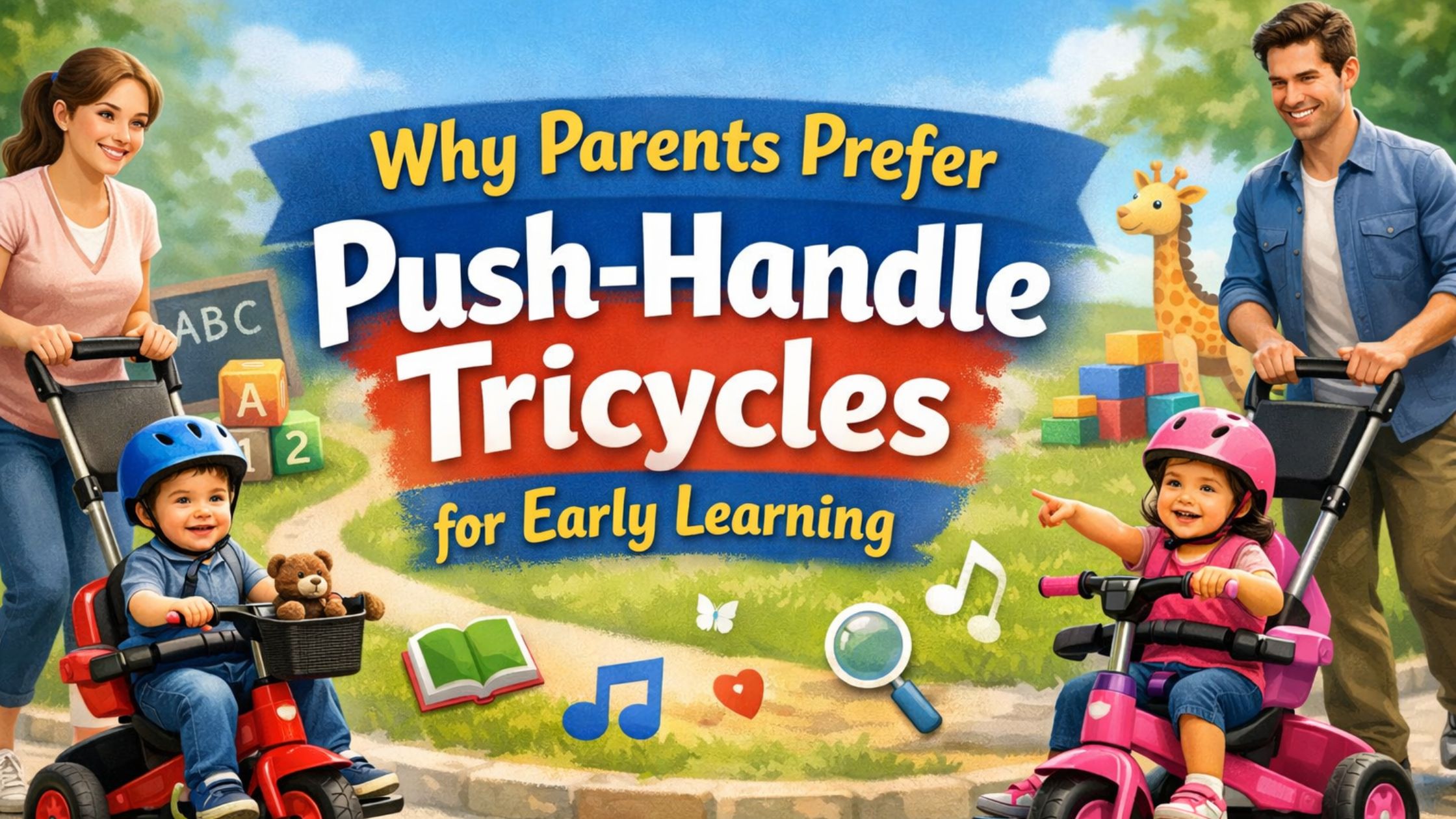
Introducing toddlers to tricycle riding is a memorable milestone, but parents often wonder how to make the experience safe, supportive and enjoyable. Push-handle tricycles have become a preferred choice because they offer the perfect combination of guided assistance, secure seating and gradual learning. They help toddlers explore mobility at their own pace while giving parents full control over direction and speed. This guide explains why these tricycles are so popular among parents and how they support early-stage development in a practical and confidence-building way.
A Smooth Transition from Stroller to Independent Riding
One of the biggest advantages of push-handle tricycles is how naturally they bridge the gap between stroller use and independent pedaling. Most toddlers are not ready to manage pedaling, steering and balance at the same time, but they are eager to be part of outdoor activity. A push-handle tricycle allows children to enjoy the feeling of movement even before they master the mechanics. Parents guide the ride while toddlers focus on observing how pedals, handlebars and forward motion connect. This early exposure helps children develop interest in riding and prepares them for independent tricycle use later on.
Why Guided Support Makes Early Learning Easier
Toddlers learn in stages, and riding is no exception. A push handle allows parents to maintain steady forward movement while toddlers practice foot placement, balance and steering. Instead of struggling to pedal from a standstill—something many toddlers find frustrating—children experience the smooth motion of riding right away. Over time, this guided assistance helps toddlers understand how their leg movements influence speed. The gradual learning process reduces frustration and builds confidence, making early riding a positive developmental experience.
Enhanced Safety and Parental Control During Early Exploration
A major reason parents prefer push-handle tricycles is the ability to maintain full control over the ride. Toddlers are naturally unpredictable—they may lean too far to one side, lose focus or attempt to stand while seated. These movements can easily cause tipping on a traditional tricycle. With a push-handle tricycle, parents can stabilize the frame instantly, adjust direction and control speed to prevent falls or bumps. This feature is especially valuable in outdoor environments where uneven surfaces, slopes or distractions may pose risks. Parental control gives toddlers the freedom to explore movement safely without compromising stability.
Improved Steering and Directional Guidance for Beginners
Steering is one of the most challenging aspects of early riding. Toddlers often turn handlebars too sharply or fail to keep the tricycle aligned with their intended path. The push handle allows parents to guide direction from behind, creating a smoother learning experience. As toddlers observe how steering influences movement, they begin developing their own directional control. This shared guidance shortens the learning curve and prepares children for independent riding later on. Parents appreciate that push-handle tricycles allow safe practice without relying solely on a toddler’s developing coordination.
Comfort-Driven Design for Longer and Happier Riding Sessions
Push-handle tricycles often include supportive features such as cushioned seats, backrests and comfortable riding positions that suit young children. Toddlers at this age are still strengthening their core muscles, so proper seating support helps them stay upright without effort. This allows them to enjoy longer rides without discomfort or fatigue. For parents, the combination of comfort and guidance means they can use the tricycle on walks, family outings or everyday mobility without worrying about the toddler becoming restless or uncomfortable.
Ideal for Safe Outdoor Exploration with Parental Supervision
Many parents want to introduce their toddlers to outdoor play but worry about safety on open pavements, courtyards or park pathways. Push-handle tricycles offer a safe compromise by allowing children to experience outdoor movement while remaining under complete supervision. Parents can maintain a walking pace while guiding the tricycle, giving toddlers the thrill of riding in real environments without exposing them to unnecessary risks. This makes the push-handle tricycle a dependable companion for evening walks, social outings or neighborhood strolls.
A Long-Term Learning Tool That Grows with the Child
Another significant advantage of push-handle tricycles is their adaptability. In the earliest stage, parents manage the movement entirely while toddlers enjoy passive riding. As children grow stronger and more confident, parents begin loosening their grip, allowing toddlers to experiment with pedaling and basic steering. Eventually, the push handle can be removed, and the tricycle transforms into a fully independent ride. This extended usability means families get far more long-term value compared to basic toddler tricycles that children quickly outgrow.
Reducing Early Frustration and Keeping Toddlers Motivated
Toddlers love the idea of riding but often become frustrated when their physical strength and coordination do not match their excitement. A push-handle tricycle eliminates this problem by letting parents provide the movement toddlers cannot yet generate on their own. Children enjoy the sensation of riding right away, which keeps them motivated to practice pedaling at their own pace. When learning becomes enjoyable instead of stressful, toddlers naturally progress faster and develop a stronger interest in physical activity.
Emotional Confidence Through Secure and Shared Experiences
Push-handle tricycles support emotional development just as much as physical learning. Riding together strengthens parent–child bonding and reassures toddlers that they are safe while trying something new. Toddlers feel independent because they are seated on the tricycle, holding handlebars and participating in movement, but they also feel secure knowing their parent is right behind them. This combination of independence and reassurance builds emotional confidence, which is essential for future milestones like bicycle riding.
Conclusion
Parents prefer push-handle tricycles because they create the ideal environment for early learning—safe, guided, comfortable and developmentally aligned with toddler growth. They allow children to experience the excitement of riding before mastering the skills required to ride independently. Parents appreciate the control they maintain over speed and direction, which makes outdoor exploration safer and more enjoyable. Toddlers benefit from a gradual, frustration-free transition into coordinated pedaling, steering and balance. As a result, push-handle tricycles remain one of the most trusted and effective tools for introducing young children to their first independent mobility experience.