
Choosing the best kids tricycle in Pakistan involves far more than picking a colourful model or a design your child finds appealing. For parents, this decision influences safety, balance development, confidence building, motor-skill growth and overall physical activity habits during early childhood. A well-chosen tricycle becomes a child’s first experience of controlled mobility, independent riding, self-balancing and exploration. Parents must therefore examine many elements including size, frame structure, wheel type, seat comfort, safety features, age suitability and long-term durability. The goal is to select a tricycle that matches the child’s physical proportions, riding environment, developmental stage and confidence level. This complete 2026 buying guide offers deeply detailed paragraphs about everything you need to know before purchasing a kids tricycle in Pakistan, ensuring your choice is safe, practical and high-value.
Children in Pakistan begin using tricycles at different ages depending on readiness and parental preference. Some parents introduce ride-on toys earlier, while others wait until the child is comfortable with basic foot movement and balance. The key point is not when you start, but what you choose. A tricycle must fit the child’s body proportions, riding style and physical ability. Choosing incorrectly leads to discomfort, poor posture, difficulty steering and even safety risks. Selecting wisely helps your child enjoy longer riding sessions and feel encouraged to practice daily, reinforcing self-confidence and motor coordination. With the rising variety of kids tricycles in Pakistan—including metal-frame tricycles, fiber-seat tricycles, double-seat tricycles, design-wheel tricycles and push-handle models—it is essential to understand how each specification impacts real-life use.
This guide will help you navigate all the specifications and considerations that matter when choosing the best kids tricycle in Pakistan in 2026. Instead of focusing only on appearance or price, we will explore how seat height, wheel diameter, pedal reach, frame material, weight capacity, wheel design, safety structure and environment suitability play a role in performance and user experience. By the end, you will be able to interpret product listings, compare models intelligently and choose the best tricycle for your child with confidence.
Understanding the Role of a Tricycle in Child Development
A kids tricycle is not just a toy; it is a developmental tool that plays a significant role in muscle strengthening, balance learning, motor-skill enhancement and confidence building. The pedalling motion activates leg muscles, helps develop coordination between hands and feet and encourages controlled movement. The steering motion teaches children how to guide direction and understand the relationship between handlebar pressure and turning radius. Tricycles also improve spatial awareness because children learn to judge distance, avoid obstacles and control speed. Parents who choose the best kids tricycle for their child support early development in a structured yet enjoyable way.
Tricycles encourage outdoor play, which is essential for building strong physical habits during early childhood. In Pakistan, many families live in homes with courtyards, driveways and open spaces suitable for supervised riding. Even indoor riding is possible when tricycles have soft, rubber-coated wheels that glide smoothly over tile and marble floors. The key point is that movement helps children develop naturally and consistently. A well-sized and well-constructed tricycle will motivate children to ride more often, while a poorly-sized one will discourage them. This makes correct size selection a crucial part of the buying process.
Age-Based Fit: What Type of Tricycle Is Suitable for Each Stage?
Age serves as a useful starting point when selecting a tricycle because different age groups have distinct body proportions, strength levels and riding abilities. Below is a detailed breakdown of what parents in Pakistan should consider for each age range when selecting the best tricycle for kids.
Ages 1 to 2
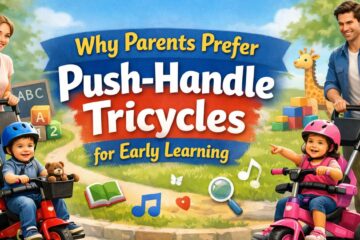
Children at this age need maximum stability and parental involvement. Their legs are short, motor coordination is still developing and they cannot pedal effectively without assistance. For this age range, the ideal tricycle features low seat height, wide rear wheels, a supportive backrest, sturdy grips and a push handle for parental guidance. Lightweight frames, particularly fiber-seat or hybrid models with metal bodies and fiber components, are preferable because they are easy for parents to steer and maneuver. Wheel size should generally fall between 8 to 10 inches for stability and comfort.
Ages 2 to 3
Children begin developing more independence at this stage. Pedalling becomes smoother as leg strength improves, and they start experimenting with steering. For this age group, parents should choose a tricycle with a slightly higher seat, larger wheels (10 to 12 inches), strong pedals and a stable frame. A comfortable fiber seat helps the child remain seated in the correct posture. Metal frames become more suitable as children grow heavier and more active. Some parents still prefer push-handle models for safety, but many children start enjoying independent riding at this stage.
Ages 3 to 5
This is the most active tricycle-riding stage. Children at this age enjoy speed, independence and exploring slightly larger areas under supervision. They require stronger frames, wider footrests, non-slip pedals and larger wheels between 12 to 14 inches. Tricycles for this age must offer stability as children begin making sharper turns and riding longer distances. Back support remains important, but the child now needs enough space for leg extension and comfortable pedalling. If the tricycle is too small, knees will rise too high, making pedaling difficult. If it is too large, children will struggle to steer safely.
Ages 5 to 6
Some children continue using tricycles until age six, especially when they prefer the stability of three wheels. For this age group, choose larger tricycles with bigger wheels (14 to 16 inches), stronger metal frames and long pedal reach. These models support outdoor riding and provide enough space for extended legroom. While balance bikes and bicycles become common at this age, some children still require the confidence and comfort that a tricycle provides. Parents should choose durable models with higher weight capacity for growing children.
Measurement-Driven Selection: The Most Accurate Way to Choose Tricycle Size
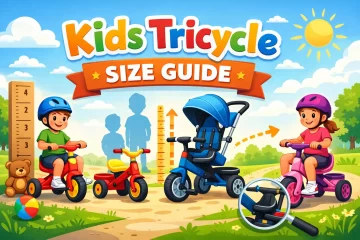
Age helps narrow down the category, but measurements ensure the tricycle fits properly. Measuring your child before purchasing reduces guesswork and prevents sizing mistakes. Here are three measurements Pakistani parents should take before buying a kids tricycle.
1. Inseam Measurement
Inseam measurement determines whether your child can reach the pedals comfortably. To measure it, have your child stand straight with feet slightly apart, then place a book between the legs up to the groin. Measure from the floor to the top of the book. Seat height should ideally be 60 to 80 percent of the inseam for toddlers and higher for older children. This ensures the child’s knees bend comfortably while pedaling without straining.
2. Torso Height
Torso height determines ideal handlebar height. Children with longer torsos may require adjustable handlebars to avoid leaning too far forward or backward during riding. The handlebar height should align with the child’s upper body to maintain an upright posture while steering.
3. Arm Reach
Measure from the child’s chest to fully extended fingertips. This ensures that the handlebar is neither too close nor too far away. A balanced reach allows children to steer comfortably without leaning excessively.
When parents take these measurements and compare them to seat height, handlebar height and frame specifications of tricycle models, the final purchase becomes more accurate and child-friendly.
Moving from Basic Features to Critical Components: What Truly Matters When Choosing a Kids Tricycle
When evaluating countless models online or in stores, parents may feel overwhelmed by the variety of colors, shapes and features. To make the process easier, focus on the components that directly influence riding performance, safety and comfort.
Seat Height and Position
Seat height is one of the most important considerations. A seat that is too low forces uncomfortable knee angles, while a seat too high disconnects the child from the pedals. Adjustable seats offer the most long-term value and accommodate growth. Fiber seats remain popular because they are lightweight, durable and comfortable for children.
Pedal Reach and Leg Extension
Assess how far the pedals sit from the seat. Children should be able to extend their legs without locking the knees and without losing contact with the pedal during rotation. Smooth pedalling encourages longer riding sessions, which supports better physical development.
Handlebar Position
Handlebars must align with the child’s natural reach. If they are too high, children lean back and lose control. If they are too low, children slouch forward. Both scenarios affect riding stability. Adjustable handlebars are an excellent feature for long-term comfort.
Frame Length
Frame length affects steering response and legroom. Shorter frames provide tight turning radii, suitable for indoor riding in Pakistani homes with narrow hallways. Longer frames provide better comfort and stability for outdoor riding in parks, courtyards and driveways.
Understanding Wheel Types and How They Impact Ride Quality
Wheel type determines grip, smoothness and noise level. In Pakistan, where many homes have tile or marble flooring, wheel type becomes particularly important.
EVA Foam Wheels
These wheels are lightweight, quiet and suitable for indoor riding. They reduce noise on hard surfaces and provide sufficient traction for toddlers.
Rubber Wheels
Rubber wheels offer stronger grip and smoother movement on uneven outdoor surfaces. They are more durable and ideal for children who ride in parks or courtyards.
Hard Plastic Wheels
These are the most affordable but also the least comfortable. They make noise on hard floors and offer limited grip. They may work for very young toddlers but are not ideal for active outdoor riders.
Wheel size also matters. Larger wheels roll more smoothly outdoors, while smaller wheels work better indoors for precise control.
Materials: Metal vs Fiber and Why Hybrid Builds Are Ideal for Pakistani Families
Material selection determines durability, weight and long-term usability.
Metal Frames
Metal tricycles are strong, stable and suitable for active children who ride outdoors. They support heavier weight and offer better longevity. Many parents prefer metal frames for children above age two because they withstand the energetic nature of growing toddlers.
Fiber Components
Fiber seats and fiber structural parts make tricycles lightweight and easy to maneuver. They also resist rust and are comfortable for children. Fiber is often used in models designed for indoor riding or younger toddlers.
Hybrid Construction
Many of the best kids tricycles in Pakistan use a hybrid design: metal frame for strength and fiber seat for comfort. This combination delivers durability and user comfort, making it one of the most popular choices for 2026.
Weight Capacity and Safety Stability
Parents must consider the child’s current weight as well as expected growth during the next year or two. A tricycle with a higher weight capacity ensures safety and durability. It also provides stability during faster rides or sharper turns. Wide rear wheels and sturdy structural joints are essential for preventing tipping. Tricycles with reinforced frames offer safer performance and longer lifecycle for growing children.
Additional Features That Improve Riding Experience
While not essential, several features enhance usability and comfort.
-
Baskets for carrying toys during outdoor play
-
Adjustable footrests for younger toddlers
-
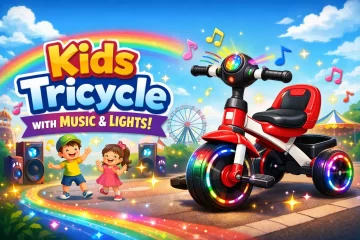
Lights and music for added engagement
-
Push handles for parental supervision
-
Cushioned seats for extended comfort
These features create a more enjoyable experience and often influence how frequently the child uses the tricycle.
Indoor vs Outdoor Suitability
The riding environment affects tricycle size and material.
Indoor Suitability
Choose lightweight tricycles with soft wheels to protect flooring. Choose smaller frames for easy turning in narrow spaces.
Outdoor Suitability
Select metal frames, larger wheels and strong grips to handle rough surfaces. Outdoor tricycles must also support more dust, friction and exposure to moisture.
Parents planning mixed use should choose mid-sized models with hybrid wheels.
Price Ranges of Kids Tricycles in Pakistan: What to Expect in 2026
Pricing varies based on frame strength, wheel quality, seat comfort, added features and brand reputation.
-
Budget models: simple fiber tricycles or plastic tricycles
-
Mid-range: metal-frame tricycles with design wheels and fiber seats
-
Premium: feature-rich tricycles with push handles, music, lights and adjustable functions
Parents should compare prices across multiple Pakistani platforms to find the best value.
How to Read Product Listings and Identify True Value
To choose the best kids tricycle in Pakistan online, analyze product images carefully, check seat height, examine wheel construction, review materials, assess weight capacity and verify adjustment options. Read user reviews and look for real usage photos. Prioritize listings that offer clear sizing details, dimensional images and assembly guidance. Listings without relevant details may not provide the best user experience.
Common Mistakes Parents Make When Buying a Kids Tricycle
-
Choosing size based only on age
-
Buying a tricycle too large for growth
-
Ignoring weight capacity
-
Overlooking wheel material
-
Not measuring the child’s inseam
-
Prioritizing design over structure
Avoiding these mistakes ensures long-term satisfaction.
Final Checklist Before Buying a Kids Tricycle
To choose correctly:
-
Measure the child’s inseam
-
Compare seat height and pedal reach
-
Check wheel size and material
-
Confirm weight capacity
-
Evaluate safety features
-
Choose appropriate frame material
-
Decide based on indoor or outdoor riding
-
Prefer adjustable options
-
Review real customer feedback
-
Choose the model that fits today, not years later
Conclusion: Choosing the Best Kids Tricycle in Pakistan in 2026
Selecting the best kids tricycle in Pakistan requires understanding size, structure, wheel design, frame material, weight capacity, safety features and environment suitability. When parents choose a tricycle based on accurate measurements and detailed product evaluation, they ensure their child enjoys safe, comfortable and confidence-building riding experiences. Whether for indoor exploration or outdoor play, the right tricycle encourages healthier development, active lifestyles and memorable childhood moments. A well-chosen tricycle becomes more than a purchase—it becomes part of your child’s early growth.